In steel structure factory building construction, the installation quality of metal sandwich panels directly determines the building’s waterproofing, insulation, airtightness, and lifespan. Improper installation, even with the highest-grade panels, can easily lead to leaks and condensation problems later on.
The following is a guide to the correct installation of metal sandwich panels, compiled based on building industry standards.
I. Core Preparations Before Installation
1. Steel Structure Re-measurement (The Most Crucial Step)
Before the panels arrive on site, the main frame (H-shaped steel beams and columns) and secondary structure (C/Z-shaped steel purlins) must be re-measured in three dimensions.
Key Inspection Points: The flatness, spacing, and verticality of the purlins.
Industry Standard: If the purlins are not on the same plane (there is a height difference), forcibly tightening the bolts will cause deformation of the sandwich panel surface and misalignment of the tongue and groove, thus creating a potential for leaks.
2. Unloading and On-site Storage
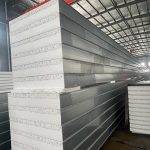
Use dedicated nylon slings or forklifts for unloading. Do not use steel wire ropes for direct binding to prevent damage to the edges of the panels.
Maintain a slight slope during storage to facilitate drainage. Elevate the bottom with square timber to prevent the panels from directly contacting the ground and absorbing moisture.
II. Standardized Roofing Panel Installation Process
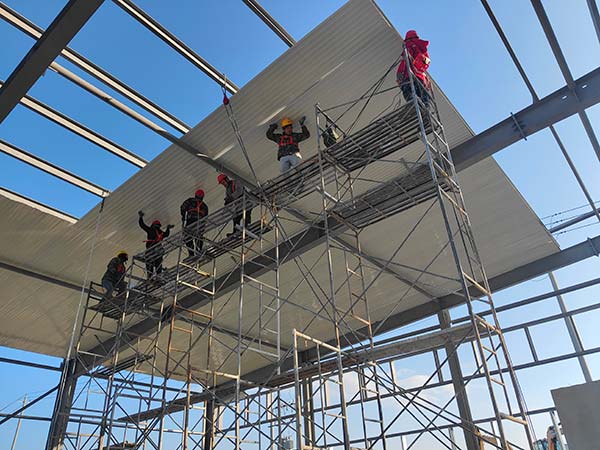
The roof is crucial for rain protection. The globally accepted standard construction sequence is as follows:
1. Determine the Prevailing Wind Direction
Installation must be carried out against the wind direction. Start from the downwind side of the prevailing wind direction and proceed upwind. This ensures that the panel overlaps face away from wind and rain, reducing the probability of wind pressure leakage.
2. Gutters and Pre-sealing
Before laying the first panel, secure the gutters and flashing. Apply shock-absorbing rubber strips to the contact surfaces between the purlins and the sandwich panels.
3. Precise Positioning of the First Panel
The installation accuracy of the first roof panel determines the overall orientation of the roof. A distance measuring instrument and string line must be used for absolute 90-degree right-angle calibration.
4. Tongue-and-Groove Joint and Butyl Tape Sealing
Before the tongue-and-groove joint of the two metal sandwich panels, butyl sealing tape must be continuously applied to the overlapping area. Apply even force during insertion to ensure a tight seal.
5. Fastener (Bolt) Fixing
Use self-tapping bolts with anti-aging EPDM washers to secure the panels to the purlins. The tightening force should be moderate: a 30% flattening of the washer is optimal; overtightening will cause the steel panel to dent and accumulate water, while undertightening will prevent waterproofing.
III. Key Points for Wall Panel Installation
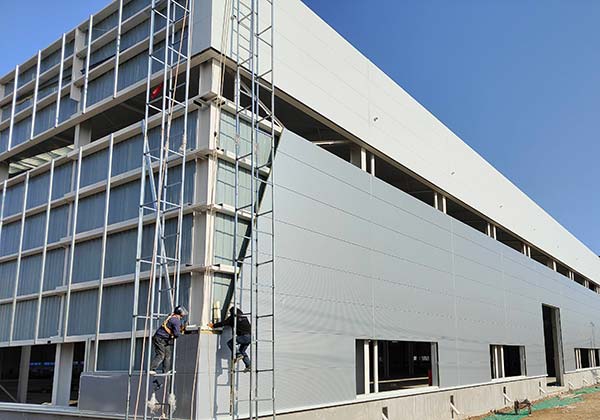
Wall panels are typically installed vertically or horizontally. The key considerations are preventing side leakage and ensuring airtightness:
Base Moisture Prevention: Before installing the wall panels, a cement parapet wall (brick wall base) or metal flashing must be installed at the bottom. The wall panels cannot be directly inserted into the soil; they must be at least 150mm above the ground to prevent rainwater from being drawn back in.
Verticality Control: When hoisting wall panels, the verticality must be checked every 5 panels using a plumb line or laser level to prevent cumulative deviations that could widen the panel joints later.
Window and Corner Areas: Door and window openings and the four corners of the building are high-risk areas for air leakage and cold bridges. These joints must be filled with polyurethane foam, wrapped with custom-made corner protectors, and then sealed twice with weather-resistant sealant.
IV. Expert Advice from the Construction Industry
Based on Canglong Group’s global delivery experience, the following three industry consensus points can help you avoid 90% of construction failures:
Strictly prohibit on-site torch cutting: If on-site cutting of panels is necessary due to size issues, circular saws or oxy-acetylene cutting (welding) are strictly prohibited. High temperatures will burn the anti-corrosion coating and color coating of the steel plate, causing the edges to rust within six months. Handheld electric shears or cold-cutting tools must be used.
Remove protective film immediately after installation: The protective film on the surface of the panels must be removed within 30 days after installation. Prolonged exposure to sunlight will cause the adhesive to deteriorate and adhere to the steel plate, which is extremely difficult to clean and affects the aesthetics.
Pay attention to thermal bridging and condensation: In high-altitude or cold storage projects, metal bolts at panel joints must be fitted with insulating plastic caps, or concealed snap-fit metal sandwich panels must be used to cut thermal bridges and prevent water dripping from the interior ceiling.
Summary
Exquisite craftsmanship gives life to architecture. Proper installation can fully leverage the 30-50 year long lifespan advantage of metal sandwich panels.


Send us the inquiry form