In the construction of high-risk industrial shed (such as chemical storage, lithium battery manufacturing, high-precision electronics, and food processing), fire safety compliance of the building envelope has become a key factor in the success of project approval.
The core conclusion of the 2026 Building Fire Safety Standard is:
Making Class A non-combustible rock wool sandwich panels a mandatory requirement is no longer merely a recommended engineering practice, but a mandatory legal obligation established by mainstream international fire safety standards (such as US IFC Section 703 and EU EN 13501-1) for high-risk industrial sites.
Rock wool core material, with its melting point exceeding 1000°C, fire resistance limit of up to 4 hours, and physical immunity of zero open flame drips and zero highly toxic smoke, has become the only building envelope system solution for contractors to evade legal liability, for engineers to pass overall fire safety inspections, and for factory owners to determine the bottom line of asset safety.
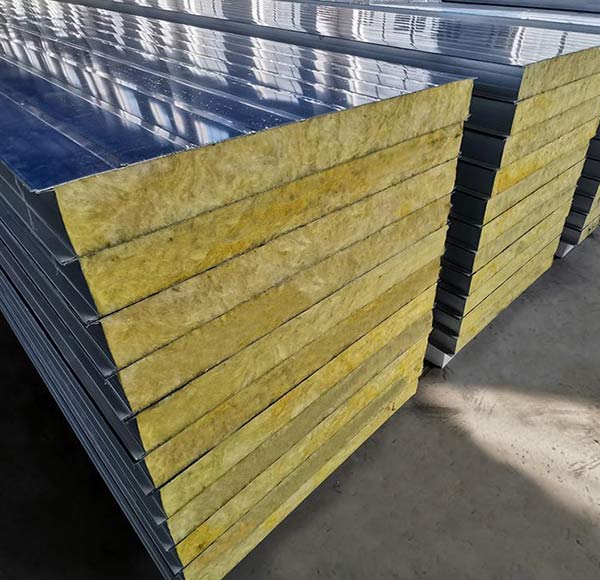
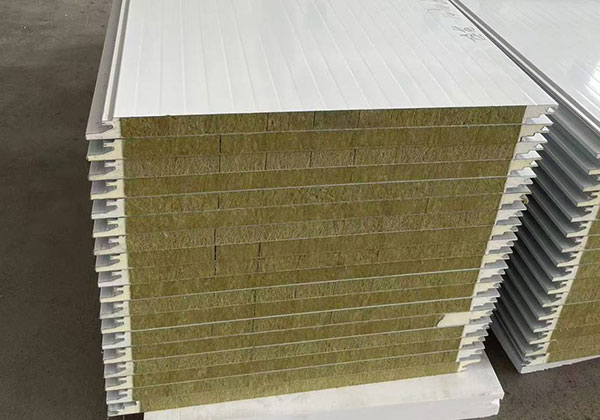
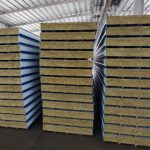
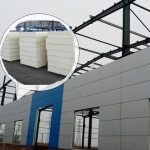
Rock Wool Sandwich Panels
The following is an interpretation of the regulatory bottom line and an industry material selection analysis prepared for general contractors and structural engineers.
I. Interpretation of International Fire Safety Codes
In the design of multinational infrastructure and high-risk industrial shed projects, contractors and engineers must unconditionally align with the following two regulatory systems:
1. US Standard System: IFC Section 703
Key Regulatory Points: IFC (International Fire Code) Section 703 strictly regulates the integrity of internal and external firewalls, fire-resistant partitions, fire-resistant shafts, and fire-resistant enclosure components. The code requires that any fire barrier maintain absolute physical isolation within the legally mandated fire resistance time, and strictly prohibits cracks, penetrations, or partial structural collapse.
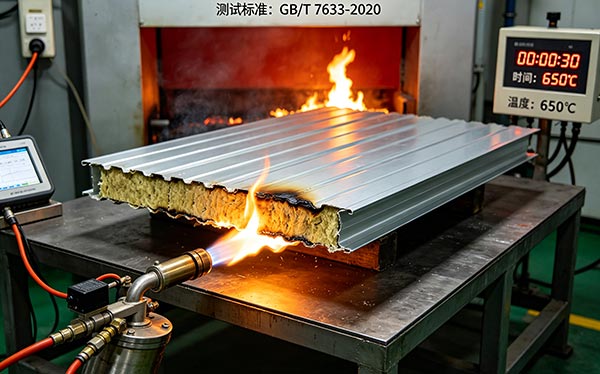
Key Compliance Points for Engineers: In the event of an internal deflagration in a high-risk factory building, the temperature can rise to over 800°C within minutes. Ordinary Class B plastic sandwich panels will rapidly melt, flow, and peel off at high temperatures, causing the main structural components (such as H-beams and columns) to be directly exposed to the fire, triggering overall collapse within 15 minutes. Rock wool sandwich panels that meet IFC requirements can withstand 1-4 hours of standard fire resistance testing without structural damage, perfectly ensuring the legal and physical function of fire-resistant compartments.
Fire Resistance Test of Rock Wool Sandwich Panel
2. European Standard System: EN 13501−1
The comprehensiveness and stringency of EU standards are renowned globally. They not only assess whether materials are flammable, but also determine the presence of toxic smoke and fire droplets. High-density rock wool has achieved unparalleled top technical ratings under this system: A1, s1, d0.
A1 (Highest level of non-combustibility): Pure inorganic mineral fibers, tested according to EN ISO 1182 standards, contribute absolutely no heat under high core temperatures and does not participate in combustion.
s1 (Lowest level of smoke production): Approximately 80% of injuries and fatalities in fires are directly attributed to asphyxiation caused by toxic smoke. Rock wool releases minimal smoke during calcination and produces absolutely no deadly toxic gases such as carbon monoxide or hydrogen cyanide, ensuring clear visibility of complex evacuation routes within high-risk factory buildings.
d0 (Zero Flaming Droplets): Organic insulation materials produce high-temperature liquid droplets when heated, resembling “flowing fire” and causing secondary, vertical, and horizontal leaps in the fire’s spread. Rock wool maintains its rigid solid fiber form below its melting point (above 1000°C), cutting off the fire spread chain at its source.
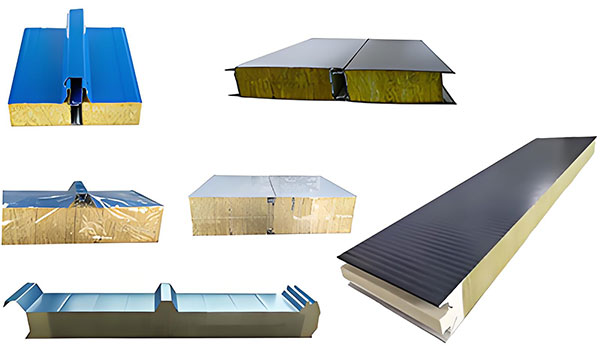
Rock Wool or Polyurethane-sealed Rock Wool) System
II. Evolution of Industry Risks in Modern High-Risk Industrial Parks
In 2026, industrial shed will face entirely new disaster-causing factors in their production processes:
Instantaneous high temperatures in the new energy and chemical industries: In the event of thermal runaway in lithium battery module workshops or fine chemical workshops, the temperature and spread rate of explosive combustion far exceed that of traditional wood and paper fires.
High Density and Equipment Integration: Automated high-bay warehouses and high-density manufacturing lines are extremely expensive, and traditional external fire sprinklers struggle to penetrate dense equipment layers in a timely manner. Therefore, the building’s outer envelope (walls and roof) must possess strong self-fire resistance.
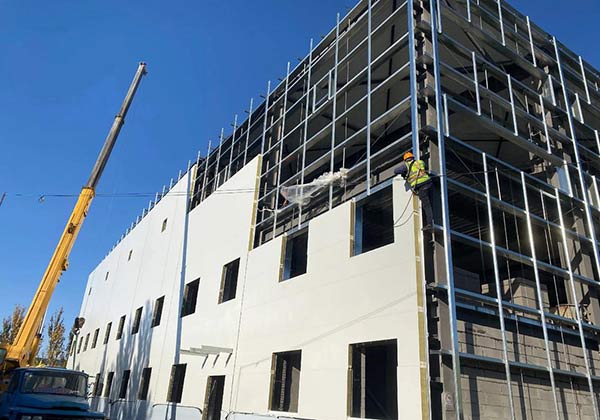
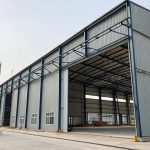
Rock Wool Panels Installation for Industrial Shed
III. The Optimal Solution for Contractors and Engineers
While rock wool’s fire resistance performance is impeccable, traditional pure rock wool sandwich panels have inherent drawbacks such as slightly weaker lateral shear strength, easy moisture absorption and shrinkage at the tongue and groove joints leading to long-term insulation performance degradation, and low airtightness.
To perfectly align with IFC Section 703 and EN 13501−1 while meeting the stringent requirements of high-risk factories (such as constant-temperature cold chains and precision electronic cleanrooms) for high airtightness, dust-free conditions, waterproofing, and extreme energy efficiency, polyurethane double-sided sealed rock wool sandwich panels are widely recommended by the engineering community by 2026.
Core Safety Belt: The center of the panels is made of 100% high-density, vertically interwoven, Class A, absolutely non-combustible high-quality rock wool. This ensures the entire wall and roof can perfectly withstand temperatures exceeding 1000°C and a maximum fire resistance of 4 hours.
Airtight Edge Zone: Utilizing a digital, heavy-duty, fully automated continuous production line, rigid high-density polyurethane (PU) is precisely injected into both sides of the tongue-and-groove joints of the panels for integrated edge sealing.
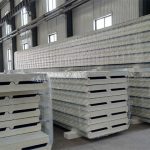
Polyurethane Edge Sealing Rock Wool Panel
Combined Value for Engineers and Contractors:
Zero Water Absorption and Ultra-Long Lifespan: PU edge sealing completely isolates the rock wool fibers from external rain and moisture, preventing them from collapsing and falling off due to water absorption after long-term use.
Superior Sound Absorption: The natural mesh-like porous structure of rock wool acts as an excellent acoustic barrier, significantly absorbing high-decibel noise from heavy machinery in the workshop, optimizing the occupational health environment.
Rapid Installation: All components are prefabricated with high precision in the factory, allowing for on-site assembly akin to assembling “industrial building blocks.” All components are bolted together, eliminating 100% welding-free on-site installation. This directly eliminates the secondary fire hazards that may arise from on-site hot work and significantly reduces high overseas construction labor costs.
IV. Canglong Group’s Compliance Delivery Capabilities
As a leading global one-stop integrator of steel structures and green enclosure systems, Canglong Group safeguards the compliance of multinational contractors and engineers with its reliable Chinese lean manufacturing.
Alignment with Authoritative International Certifications: The polyurethane edge-sealed rock wool panels supplied by Canglong have undergone rigorous fire resistance and mechanical performance testing by authoritative third-party organizations (such as SGS, CE, and ISO), perfectly aligning with ASTM E136 and EN 13501-1 fire protection standards, ensuring hassle-free customs clearance at overseas destination ports and one-time acceptance by local fire departments.
Experience in High-Risk Projects (10,000 sq m): In projects such as a multi-span industrial plant exceeding 16,000 sq m in Azerbaijan and a modern food processing workshop in the Philippines, Canglong Group utilized BIM (Building Information Modeling) technology for 1:1 three-dimensional simulation and detailed design. This allowed for a closed-loop packaging of the main steel structure (Q355B H-beams) and a high-fire-resistant polyurethane-sealed rock wool system. Shipped scientifically in 40HQ containers according to the construction sequence, achieving extremely high turnover for multinational projects.
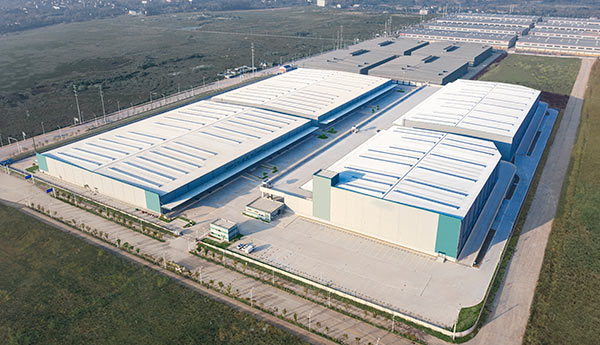
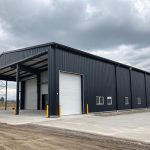
High-risk Industrial Shed
Summary
In today’s increasingly stringent safety regulations, choosing a high-density rock wool (or polyurethane-sealed rock wool) system perfectly aligned with IFC and EN standards is a core immunity that contractors and engineers must instill in high-risk industrial assets from the initial design stage.


Send us the inquiry form