In recent years, an increasing number of international manufacturing companies have relocated their factories to Thailand. Whether it’s automotive parts, electronics manufacturing, food processing, or logistics warehousing, steel structure factory building has become the preferred building type for investors. However, to build a truly high-standard steel structure factory capable of long-term stable operation, simply choosing a steel structure is not enough; a comprehensive design is also needed, taking into account Thailand’s local climate characteristics, industry needs, building codes, and future expansion plans.
Steel Structure Factory Construction
Why are more and more companies choosing to invest and build factories in Thailand?
Thailand, located in the heart of Southeast Asia, is a crucial manufacturing base connecting the ASEAN market and a vital node in the global industrial chain.
In recent years, with the adjustment of global supply chains, more and more companies have relocated their production bases to Thailand. The main reasons include:
A superior geographical location, radiating to a market of over 600 million people in ASEAN;
Mature industrial chains in automobiles, electronics, electrical appliances, and food processing;
Well-developed port, highway, and logistics systems, facilitating international trade;
Open policies towards foreign investment, with mature industrial parks;
Abundant labor resources and ample manufacturing experience.
Therefore, the demand for new industrial plants, logistics warehouses, and production bases continues to grow, and steel structure buildings, with their advantages of fast construction speed and quick return on investment, have become the mainstream choice in the market.
Step 1: Planning Plant Layout Based on Industry Characteristics
Different industries have significantly different requirements for plant buildings, making early planning particularly important.
For example:
Automotive parts factories
Require large production lines, overhead cranes, and ample space for equipment installation.
Electronics manufacturing factories
Focus more on cleanliness, constant temperature and humidity, and the layout of subsequent electromechanical systems.
Food processing plants
Require good insulation, corrosion resistance, and an enclosure system that is easy to clean and maintain.
Logistics Warehouses
Prioritize large spans, high headroom, and shelving layout.
Rational planning of column spacing, span, headroom, logistics flow, and future expansion areas can effectively improve land utilization and reduce later renovation costs.
Step 2: Choosing a Steel Structure Design Suitable for Thailand’s Climate
Thailand has a tropical monsoon climate, characterized by high temperatures and humidity year-round, with some areas also affected by torrential rains and monsoons.
Therefore, high-standard steel structure factory buildings should focus on the following aspects:
Good Corrosion Resistance
High temperature and humidity environments accelerate steel corrosion; therefore, steel components typically require sandblasting for rust removal and the use of high-quality anti-corrosion primers and topcoats. Hot-dip galvanizing can be used when necessary to improve building durability.
Excellent Drainage System
Thailand experiences concentrated rainfall during the rainy season; therefore, roof design should fully consider drainage capacity.
A rationally designed roof slope, along with a sufficient number of gutters, rainwater pipes, and overflow systems, can effectively reduce the risk of water accumulation and extend the building’s lifespan.
Wind-Resistant Design
Although Thailand is not a region most frequently hit by typhoons, coastal areas and heavy rainfall can still bring significant wind loads.
Therefore, in the structural design, calculations should be performed on steel columns, steel beams, support systems, and roof connection nodes based on the wind load requirements of the project site to ensure the overall stability of the building.
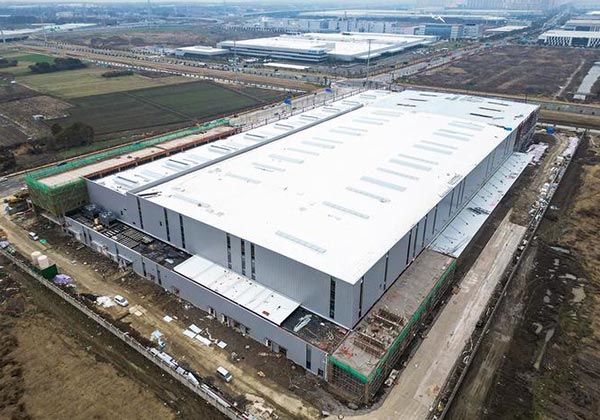
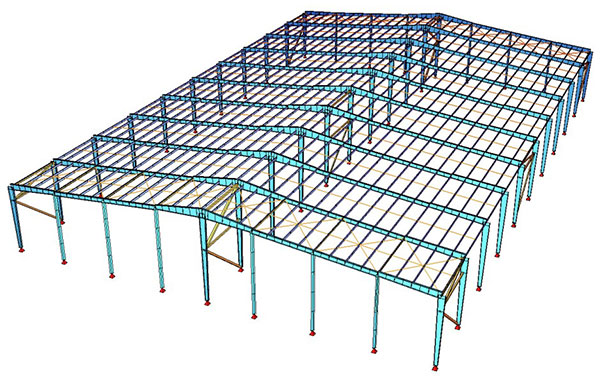
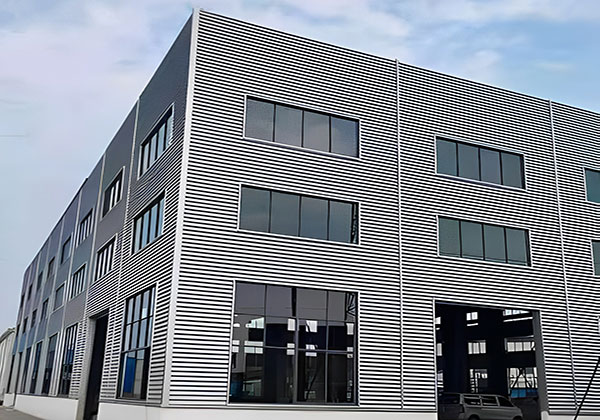
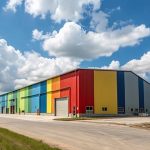
Steel Structure Factory Design
Step 3: Selecting a High-Performance Enclosure System
The enclosure system directly affects the energy consumption, comfort, and operating costs of the factory building.
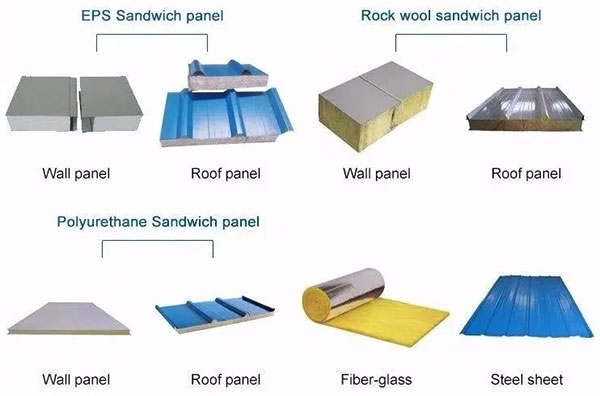
Currently common solutions include:
PU Polyurethane Sandwich Panels
Excellent thermal insulation performance, suitable for factories with high temperature control requirements, such as food processing and electronics manufacturing.
Rock Wool Sandwich Panels
Good fire resistance, suitable for high-safety-level industrial buildings.
Color Steel Single-Layer Panel System
Lower investment cost, suitable for general warehousing and logistics buildings.
For Thailand’s year-round high-temperature environment, using high R-value insulated sandwich panels can effectively reduce air conditioning energy consumption, improve the indoor working environment, and increase production efficiency.
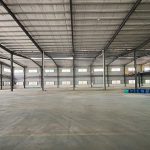
Step 4: Employing Large-Span Steel Structures to Improve Production Efficiency
Modern manufacturing increasingly favors open-plan production spaces.
Steel structures can easily achieve column-free spans of 20 meters, 30 meters, or even larger, allowing for more flexible equipment layout.
Large-span factory buildings offer the following advantages:
Increased freedom in equipment layout;
Meets the installation requirements of automated production lines;
Facilitates forklift and logistics transportation;
Simplifies future expansion;
Improves overall space utilization.
For factories requiring bridge cranes, crane beam systems can be designed according to equipment tonnage, increasing production capacity.
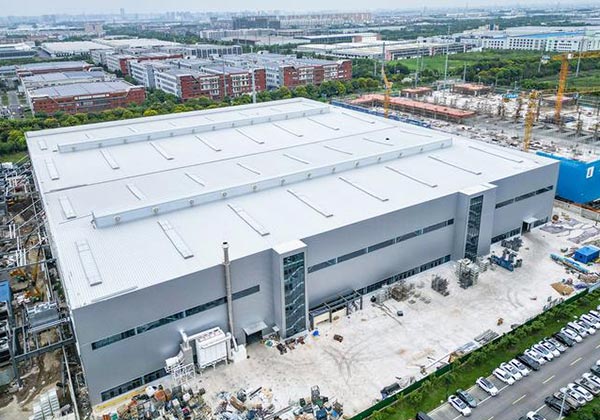
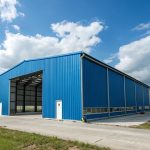
Design of Large Span Steel Structure Factory building
Step 5: Emphasizing Factory Prefabrication to Improve Construction Efficiency
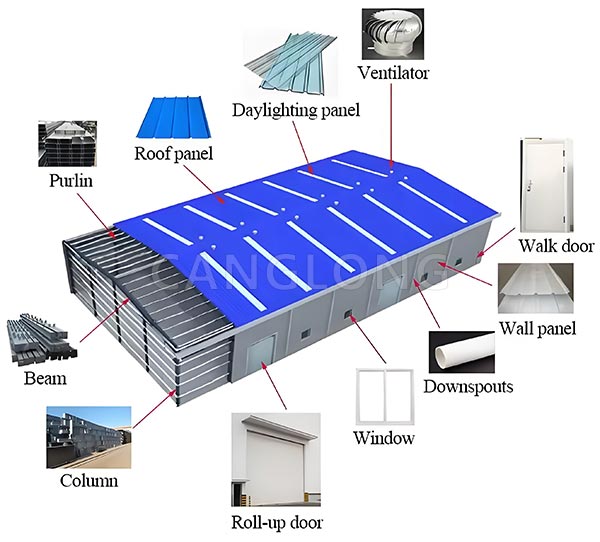
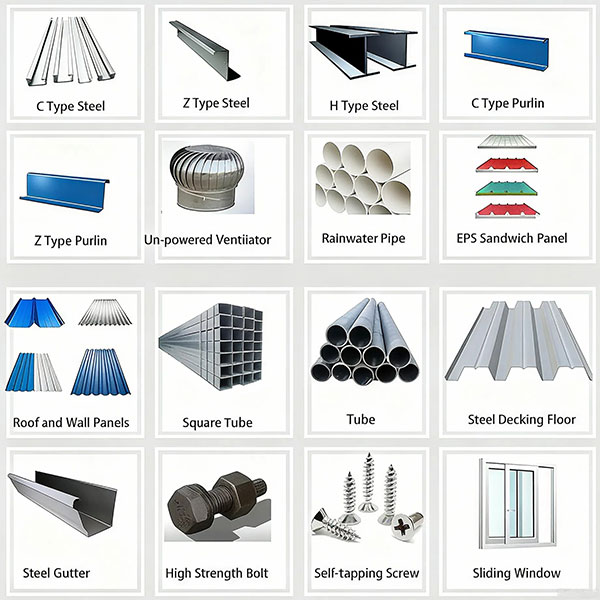
One of the biggest advantages of steel structure is that components can be standardized and prefabricated in factories.
These include:
H-beams and columns;
C/Z-beam purlins;
Support systems;
Connecting plates and high-strength bolts;
Roofing and wall cladding materials.
On-site work mainly involves hoisting and connection, which significantly shortens the construction cycle compared to traditional concrete buildings, helping companies to start production faster.
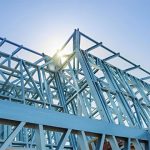
Steel Structure Factory Kits
Step 6: Reserving Space for Future Expansion
As businesses grow, production capacity often needs to be continuously increased.
Steel structure buildings have excellent scalability, allowing for expansion interfaces to be reserved during the design phase, enabling the addition of:
New production workshops;
Warehouse areas;
Office buildings;
Logistics loading and unloading platforms;
Automated equipment areas.
Compared to traditional buildings, this significantly reduces later modification costs.
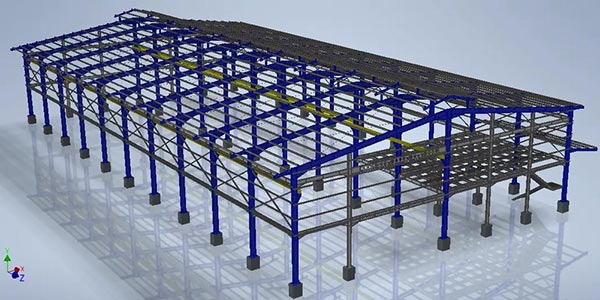
Steel Factory Building with Mezzanine
One-stop steel structure solutions are more suitable for overseas industrial projects
For international investors, simply providing steel structure product is far from enough; comprehensive project service capabilities are even more important.
Professional steel structure suppliers typically provide:
Project planning;
Architectural structural design;
Detailed steel structure design;
Component manufacturing;
Quality inspection;
Export packaging and shipping logistics;
On-site installation guidance;
After-sales technical support.
This one-stop service not only reduces communication costs but also effectively controls project progress and improves overall construction efficiency.
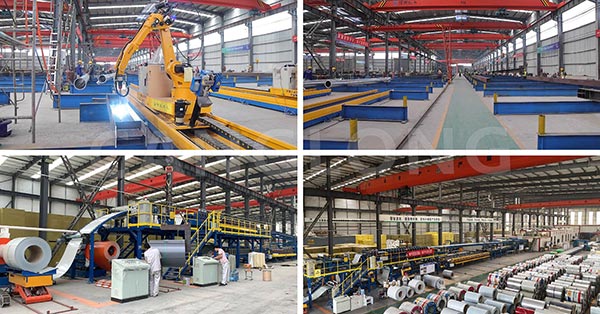
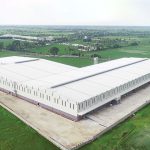
Canglong Production Workshop
Conclusion
Building a high-standard steel structure factory in Thailand involves more than just selecting steel; it requires scientific design and systematic planning that considers local climate conditions, industry characteristics, and long-term operational needs. From structural systems, enclosure materials, and corrosion protection measures to construction management, every aspect directly impacts the factory’s lifespan, operating costs, and return on investment.
As a professional steel structure building solutions provider, Canglong Group offers global clients a one-stop service encompassing design, manufacturing, export transportation, and installation guidance. Whether it’s industrial plants, logistics warehouses, food processing plants, or automotive parts production bases, we are committed to creating modern steel structure buildings that meet international standards, adapt to local environments, and balance economy and durability, helping clients build factories faster, start production faster, and create value faster.

Send us the inquiry form