Africa is experiencing a dual wave of accelerated urbanization and infrastructure upgrading, with an urbanization rate of 43% in 2023 (according to United Nations data) and expected to exceed 60% by 2050, leading to a huge demand for facilities such as housing, logistics, and healthcare. In this context, steel structure prefabricated buildings with their core advantages of fast delivery, controllable cost, and strong disaster resistance, have become the key path to solving the bottleneck of infrastructure in Africa.
Industry Trends
1. Explosive demand
Housing crisis: Africa needs to add 20 million new housing units every year, and traditional brick and concrete buildings have long construction periods and high costs, making it difficult to meet the demand. Steel structure prefabricated buildings, such as modular dormitories and community centers, can compress the construction period to 2-4 weeks and reduce costs by 20% -30%.
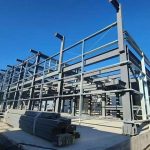
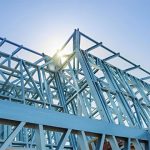
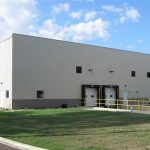
Industrial supporting facilities: Logistics parks, agricultural product processing plants, new energy power stations and other projects have surged, requiring large-span and weather resistant buildings. Steel structure trusses and prefabricated door frame kits have become the preferred choice.
2. Technical adaptation
Modular advantage: African labor skills are uneven, and on-site construction relies on skilled workers. The factory production of prefabricated steel structure components only requires bolt connections on site, reducing 70% of on-site welding and adapting to local construction conditions.
Disaster resistance needs: Africa is prone to earthquakes and hurricanes, and steel structure flexible nodes and lightweight design can reduce seismic loads by 30%, with wind resistance performance reaching level 12.
3. Policy dividend: resonance between industrialization and green transformation
Regional cooperation: The African Continental Free Trade Area (AfCFTA) promotes cross-border circulation of building materials, and countries such as Nigeria and Ethiopia have introduced support policies for the steel structure industry (such as tax reductions and land concessions) to attract foreign investment to set up factories.
Green orientation: The African Development Bank (AfDB) has included low-carbon buildings in its funding standards, with a steel structure recycling rate of over 90% and carbon emissions during the prefabrication process 40% lower than cast-in-place concrete, in line with ESG trends.
4. Challenges and Breakthroughs
Core Challenges
Breakthrough Paths
Supply chain relies on imports (90% of steel is imported)
Nearshore Layout: Establish regional processing centers in South Africa and Egypt to radiate surrounding countries; promote the “local scrap steel recycling + electric furnace steelmaking” model (e.g., Nigeria’s Dangote Steel Mill).
High logistics costs (accounting for 25% of total project cost)
Modular Transportation: Components are designed according to the “maximum transport unit” (e.g., a 20-foot container holds a 300㎡ house kit) to reduce shipping frequency.
Shortage of technical talents
Integration of “Design-Training-Operation and Maintenance”: Chinese enterprises provide BIM technology training to cultivate local technicians (e.g., Rwanda’s “Steel Structure Craftsman Program”).
Canglong Group’s one-stop solution
In response to the above dynamics, Canglong Group provides adaptive solutions for African customers through full chain services including design, materials, construction, and after-sales:
1. Precise design
Climate optimization: Targeting high temperatures and humidity in sub Saharan Africa, rock wool sandwich panels and ventilated roof design are used to improve insulation performance by 50%. Strengthen the flexible connection of beam column nodes for the East African seismic zone.
Function customization: Design large-span portal frames (single span 36 meters) for logistics customers, provide modular residential kits for community projects, and achieve ready to move in.
2. Material guarantee
Green materials: mainly promote recycled steel, matched with color steel plate/rock wool sandwich panel enclosure system (A-level fireproof, salt spray resistant), meeting the building codes of many African countries.
3. Construction support
Remote guidance: Simulate the installation process through BIM models, provide installation drawings and videos, and reduce construction errors.
Dispatch Installation: The company has a professional installation team that can dispatch installation workers to install or provide guidance.
4. After sales operation and maintenance
Provide a 5-year structural warranty and lifelong maintenance consultation, regularly follow up on customer project situations, and provide early warning of repair needs.
Support the renovation of old buildings (such as adding floors to warehouses and converting residential functions) to extend the service life of assets.
Future Prospects
The African steel structure prefabricated building market is expected to have a compound annual growth rate of 12% from 2025 to 2030 (Frost&Sullivan data), driven by core factors including:
Short term (2025-2027): Under policy promotion, countries such as South Africa and Nigeria will take the lead in large-scale application.
Mid term (2028-2030): After the regional supply chain matures, costs will be reduced by another 15% compared to traditional buildings, penetrating into small and medium-sized cities.
Long term (2030+): Combining with photovoltaics and energy storage to form a zero carbon building ecosystem for steel structures and new energy.
Conclusion
Steel structure prefabricated buildings are reshaping the infrastructure logic in Africa, and Canglong Group’s one-stop solution through localized design, low-carbon materials, transportation, and installation will become a key partner for customers to seize the African market.

Send us the inquiry form