In industrial factory construction, balancing speed, energy efficiency, and durability has always been a core concern for owners. In recent years, PU sandwich panels with their excellent comprehensive performance, have become the preferred enclosure material for an increasing number of factory projects. This article will briefly analyze the main advantages of PU sandwich panel from an industry application perspective.
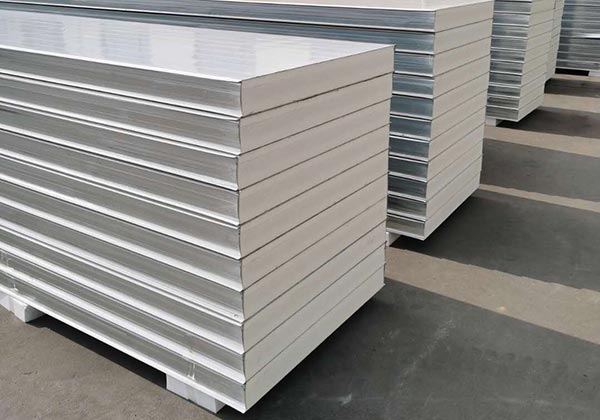
The core material of PU sandwich panel is rigid polyurethane foam, which has an extremely low thermal conductivity (approximately 0.022 W/m·K). A 50–80mm thick PU sandwich panel provides insulation comparable to a 1-meter thick ordinary brick wall.
Industry Analysis: With continuously rising global energy prices, countries are imposing increasingly stringent requirements on building energy efficiency. Factories using PU sandwich panels can reduce air conditioning and heating energy consumption by 30%–40%, significantly reducing long-term electricity costs. For overseas users, this means a shorter return on investment period.
2. Lightweight and High-Strength, Fast Construction
PU rigid foam and metal panels (such as color-coated galvanized steel sheets) are bonded together through a continuous composite process to form a strong whole. This structure makes the panels:
Lightweight (approximately 10~14 kg/m²);
High load-bearing capacity, suitable for wall panels and roof panels;
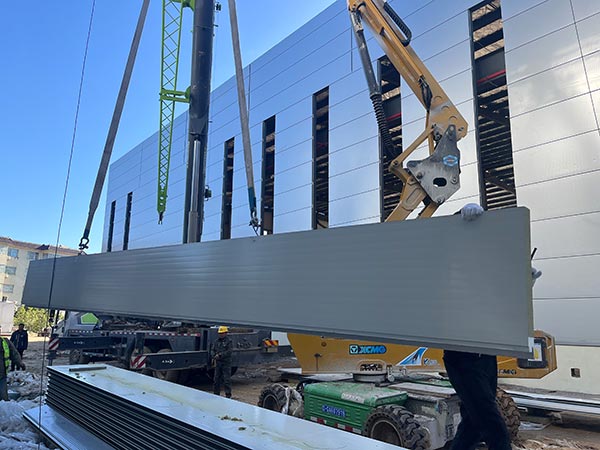
Easy to cut, hoist, and splice (often using concealed fasteners or self-tapping screws).
Industry Analysis: Rising labor costs in Latin America, Southeast Asia, and Africa directly impact the total project cost due to the construction cycle. Compared to traditional masonry or on-site composite insulation layers, PU sandwich panels can shorten the construction period by 30%~50%, helping owners to start production faster.
3. Fire Resistance Meets International Standards
Modern PU sandwich panels use flame-retardant polyurethane. When the core material is exposed to fire, the surface rapidly carbonizes, forming a barrier layer that effectively inhibits the spread of flames. Mainstream products can pass international tests such as ASTM E84 and BS 476, achieving a fire resistance rating of B2 or B1.
Industry Analysis: Fire safety compliance is a crucial aspect for both property owners and insurance companies. Choosing certified PU sandwich panel not only makes it easier to obtain local building permits but can also reduce fire insurance costs and enhance asset security.
4. Durable, Moisture-proof, and Low-maintenance
PU sandwich panel use high-quality galvanized/aluminized zinc steel sheets with polyester, silicone-modified polyester, or PVDF coatings, making them corrosion-resistant and UV-resistant. The core material has a closed-cell rate of over 97%, absorbing almost no water and preventing rotting or mold growth due to moisture.
Industry Analysis: In coastal, rainy, or high-humidity areas, traditional building materials are prone to rust or mold. PU sandwich panels can last over 20 years under normal use, requiring only simple cleaning and resulting in extremely low maintenance costs.
5. Flexible Design and Clean Appearance
PU sandwich panels are available in various panel types (flat, corrugated, flat with concealed nails, etc.) and a wide range of colors to suit different factory facade styles. They can also be used for interior partitions, cold storage, and even cleanrooms. Industry Analysis: Modern factories are no longer just production sites, but also part of a company’s image. Using PU sandwich panel easily achieves a smooth, modern visual effect, eliminating the need for additional exterior wall decoration.
Industry Trends
Currently, international green building certifications such as LEED, BREEAM, and EDGE encourage the use of high-performance building envelopes. PU sandwich panels help to:
Reduce thermal bridging effects
Reduce building operating energy consumption
Reduce structural steel usage through lightweight design
Recycle and reuse the metal surface layer
As countries advance their “carbon neutrality” goals, PU sandwich panels are transitioning from an optional material to a standard feature in industrial plants.
Summary
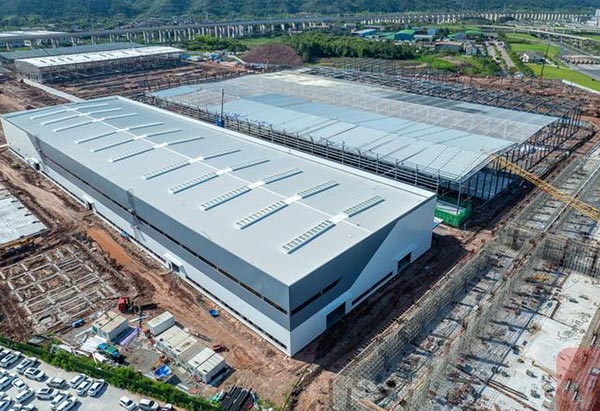
Whether it’s a small 500-square-meter processing workshop or a large 10,000-square-meter logistics warehouse, PU sandwich panel achieve the optimal balance between insulation, construction speed, safety, durability, and cost control. For customers, choosing PU sandwich panels with international certifications (such as FM, CE, SGS) and combining them with a professional steel structure company (such as Canglong Group) to provide a one-stop solution ensures smooth project implementation and long-term benefits.
For more technical parameters or project case studies, please consult a professional steel structure and sandwich panel supplier.





Send us the inquiry form