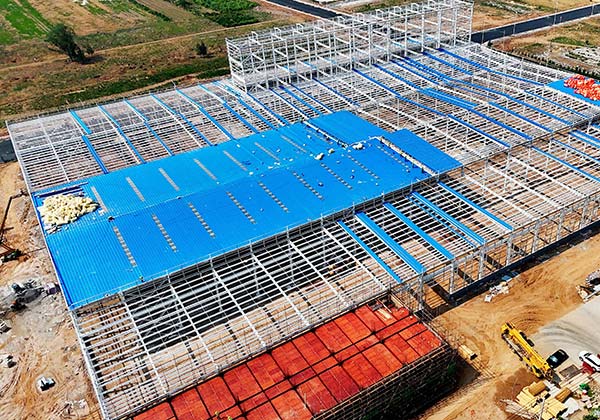
In the construction of steel structure warehouses, the choice of roof panels directly affects the insulation effect, service life, energy consumption cost and overall return on investment. Faced with the common color steel plates, EPS sandwich panels, PU sandwich panels and rock wool sandwich panels on the market, how to make the right choice? This article starts from the performance, cost and application scenarios to help users make quick decisions.
Overview of common roof panel types
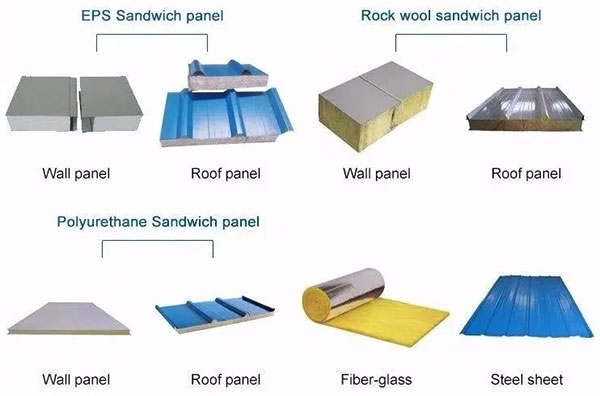
Currently, the following four types of materials are mainly used for steel structure warehouse roofs:
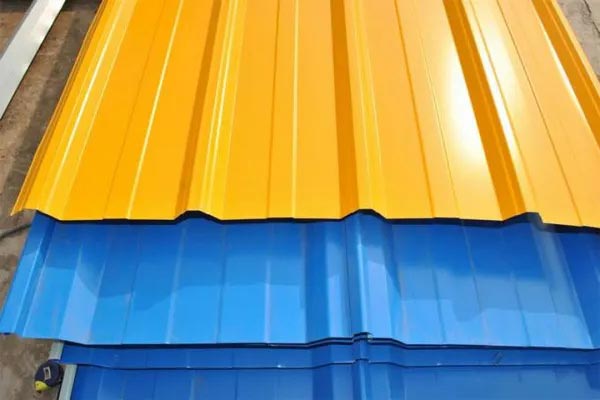
Color steel plate (single layer profiled plate)
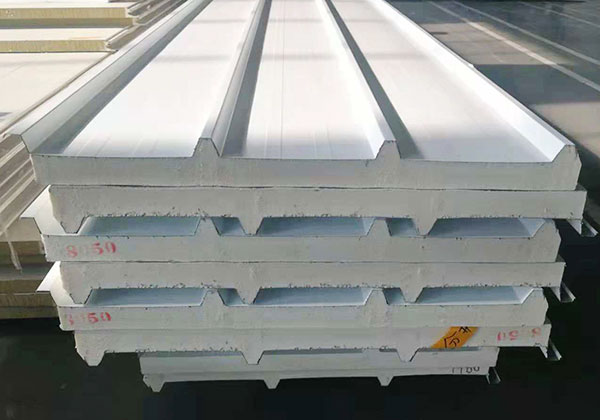
EPS sandwich panel (polystyrene)
PU sandwich panel (polyurethane)
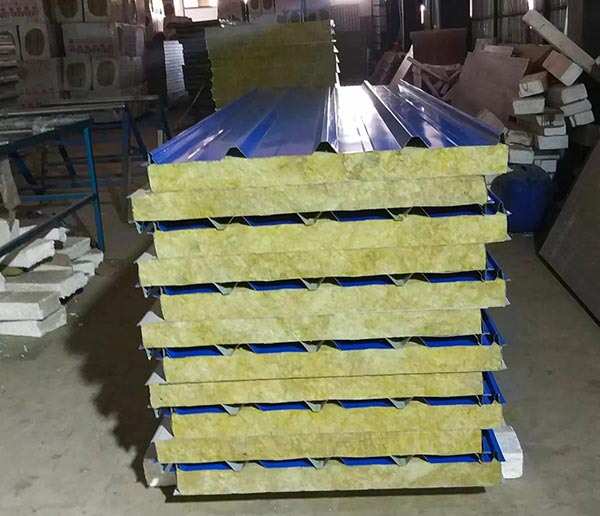
Rock wool sandwich panel
Their core differences are mainly reflected in: thermal insulation performance, fire protection level, cost and applicable scenarios.
Comparative analysis of four roofing materials
1. Color steel plate: a basic choice with economic priority
Features:
Single layer metal plate, no insulation layer
Lowest cost and light weight
Quick installation
Advantages:
Suitable for projects with limited budget
Short construction period
Limitations:
Almost no thermal insulation properties
Susceptible to temperature differences (hot in summer and cold in winter)
Excellent sealing performance and obvious energy saving effect
Suitable for multi-climate environments
Limitations:
Cost is higher than EPS
Applicable scenarios:
👉 Cold chain warehouses, food warehousing, pharmaceutical warehouses, projects with high temperature control requirements.
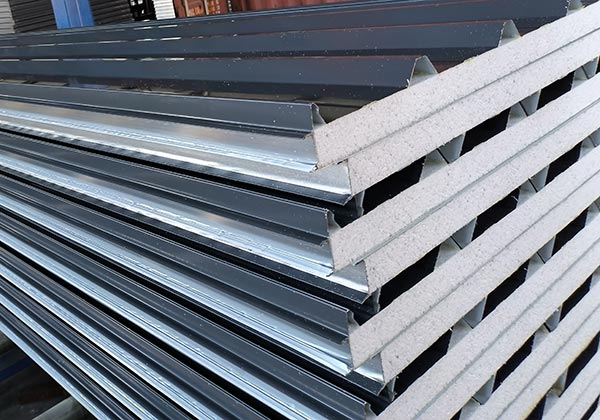
4. Rock wool sandwich panel: fire protection preferred choice
Features:
Inorganic rock wool as core material
non-combustible materials
Advantages:
High fire protection level (Class A non-combustible)
Good sound insulation performance
High temperature resistance
Limitations:
Greater self-respect
The thermal insulation performance is slightly lower than that of PU
Cost is medium to high
Applicable scenarios:
👉Chemical warehouses, high safety requirements factories, high standard projects in Europe and the Middle East.
How to choose roof panels according to the project?
When choosing roof shingles, it is recommended to start with the following four key factors:
1. Climatic conditions
Tropical/high temperature areas: PU or EPS is preferred
Cold areas: PU recommended
Rainy areas: focus on sealing and anti-corrosion performance
2. Functional requirements
Ordinary warehousing → EPS / color steel plate
Temperature controlled warehouse → PU sandwich panel
High fire protection requirements → Rock wool sandwich panels
3. Budget control
Low budget → Color steel plate
Mid-budget → EPS
High-end projects → PU / rock wool
4. Regulations and Standards (Global Trends)
Europe and the Middle East: More emphasis on fire protection (rock wool)
Americas and Southeast Asia: Pay more attention to cost and energy saving (PU/EPS)
Trend: Transition to energy-saving and environmentally friendly materials
Industry trends
From the perspective of steel structure warehousing development, roofing materials are showing two major trends:
Energy saving priority: Demand for PU sandwich panels is growing rapidly.
Safety first: Rock wool’s share of the high-standard market has increased.
At the same time, as energy costs rise, more and more companies are beginning to pay attention to:
👉 Long-term operating costs, not just initial construction costs
Canglong solution
Today, Canglong Steel Structure provides one-stop roofing system solutions to help customers achieve the best choice:
Customized selection: Recommend materials based on climate and use.
Integrated design of structure and enclosure: avoid water leakage and thermal bridge problems.
High standard production: improve plate life and performance.
Global transportation and installation support: ensuring the smooth implementation of the project.
This systematic approach not only improves building quality, but also effectively reduces long-term maintenance and energy consumption costs.
Conclusion
There is no best choice for warehouse roof panels, only the most suitable.
Pursue low cost → Color steel plate
Pursue cost-effectiveness → EPS
Pursuing energy saving → PU
Pursuing safety → rock wool
Under the general trend of warehousing upgrades, reasonable selection of roof systems will directly affect the cost, efficiency and sustainability of the project. Choosing professional steel structure solutions will also become a key step for enterprises to achieve long-term value.



Send us the inquiry form