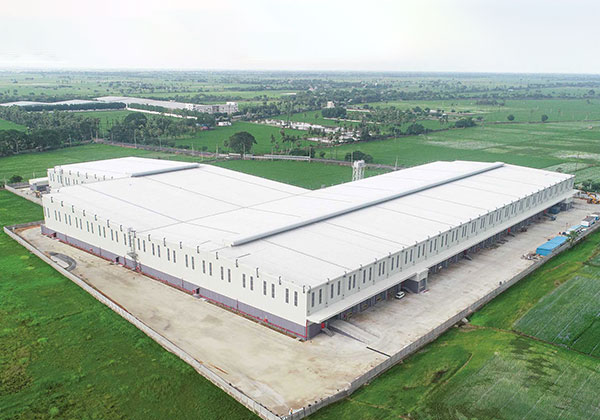
Against the backdrop of accelerated global industrialization and urbanization, factory construction, as the core carrier of manufacturing and logistics warehousing, is undergoing profound changes. Precast steel structures, with their outstanding advantages such as standardized production, efficient construction, and green, low-carbon practices, are gradually replacing traditional concrete structures and becoming the mainstream trend in global factory construction.
According to data from IMARC Group, the global market size for precast building and structural steel reached US$248 billion in 2024 and is projected to climb to US$396.6 billion by 2033, with the industrial factory sector contributing significantly to this growth. Behind this growth lies the comprehensive competitiveness of precast steel structures in terms of efficiency, cost, and environmental protection, as well as the dual driving force of policies and market demands worldwide.
I. Ultimate Efficiency
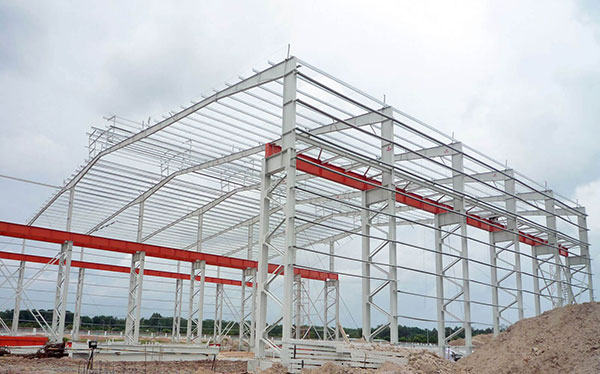
The core advantage of precast steel structures lies in significantly shortening the construction cycle, which is crucial for global companies seeking rapid production and return on investment. Unlike traditional concrete structures, which suffer from long on-site pouring and curing cycles, precast steel structures feature standardized factory production of core components such as beams, columns, and wall panels. This eliminates the constraints of on-site weather and geological conditions, allowing production and on-site foundation construction to proceed simultaneously.
Industry data shows that the on-site assembly cycle for precast steel structure building is typically more than 30% shorter than that of traditional concrete buildings. Guangzhou’s first steel structure prefabricated residential project, with an 80% factory prefabrication rate, achieved a 30% reduction in construction time. This efficiency advantage is also applicable to industrial plant projects. In the North American market, where labor costs are high, this efficient model can significantly reduce on-site labor input. Furthermore, amidst the Southeast Asian infrastructure boom, rapid delivery capabilities better meet the surge in demand for factory buildings resulting from industrial relocation.
In addition, the deep integration of BIM technology with precast steel structures further enhances efficiency. Currently, the global leading companies have over 78% adoption of BIM technology, enabling precise component matching through digital modeling, reducing on-site adjustment errors, and further improving construction efficiency by approximately 40%.
II. Cost Optimization
Although the initial construction cost of prefabricated steel structure is slightly higher than that of traditional concrete structures, their overall cost advantage is significant from a life-cycle perspective. In the short term, shorter construction periods can substantially reduce capital tied up in capital, on-site management fees, and machinery rental costs. Data from one project shows that prefab steel structures can save approximately $4 million in capital costs and $420,000 in management fees by shortening the construction period by one year. In the long term, steel structure factories have lower maintenance costs, and the use of materials such as weathering steel can improve building durability and reduce later repair costs.
Meanwhile, policy incentives in various regions further offset the initial cost differences. China’s “14th Five-Year Plan” for the development of prefabricated buildings proposes that by 2025, prefabricated buildings should account for more than 30% of newly started construction, and compliant projects can receive floor area ratio bonuses or tax incentives. Some European countries provide subsidies for green-certified modular projects, while the United States drives demand for modular factory construction through manufacturing reshoring policies. Furthermore, prefabricated steel structures have extremely low material loss rates; precise factory production can control losses to within 3%, far lower than the material waste of traditional on-site construction, further reducing overall costs.
III. Green and Low-Carbon
Driven by global “dual-carbon” goals, green building has become a mandatory requirement in the industry. Precast steel structures with their superior environmental performance, perfectly align with this trend. Steel has extremely high recycling value, with a recycling rate of up to 98%. Dismantled steel can be directly recycled, conforming to the concept of a circular economy, while the recycling rate of concrete structures is only about 30%. The carbon emissions of modular steel buildings throughout their entire life cycle are projected to be 45% lower than traditional buildings by 2030. This advantage makes them highly sought after in the European market, where environmental policies are stringent, and green-certified modular projects already account for over 65%.
Furthermore, precast steel structures significantly reduce construction waste and environmental pollution during construction. On-site construction waste emissions are reduced by 80% compared to traditional methods, and there is no water consumption associated with concrete curing. Simultaneously, the enclosure system of steel structure workshops can be combined with insulation materials such as EPS sandwich panels, along with reasonable lighting design, reducing air conditioning energy consumption by 42%-57%, resulting in significant energy savings in long-term operation. These characteristics enable it to easily adapt to mainstream global green building certification systems such as LEED and BREEAM, enhancing the project’s competitiveness in the international market.
IV. Structural Advantages
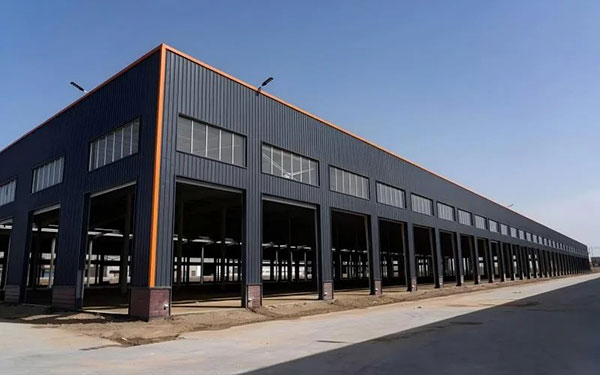
Industrial plants have extremely high requirements for the load-bearing capacity, spatial flexibility, and safety of building structures, which prefabricated steel structure perfectly meet. Steel structures have an excellent strength-to-weight ratio, allowing for large-span, column-free spatial designs, providing ample space for production line layouts, goods storage, and loading/unloading, making them particularly suitable for logistics warehousing, heavy manufacturing, and other fields. For example, the 5,000-square-meter irregularly shaped factory project in Chile uses a combination of Q355 steel and H-beams and columns, ensuring structural stability while adapting to the design requirements of irregular spaces.
In terms of safety, steel structures have excellent ductility and seismic and wind resistance, capable of withstanding category 12 typhoons and strong earthquakes, and adapting to different geological and climatic conditions worldwide. From typhoon-prone areas in Southeast Asia to the extreme temperature variations of the Middle East, and to earthquake zones in North America, prefabricated steel structures can meet safety standards through material and joint optimization. Meanwhile, the renovation and expansion of steel structure workshops are extremely convenient, allowing for rapid adjustments to spatial layout based on enterprise capacity upgrade needs, extending building lifespan, and avoiding resource waste.
V. Future Trends
Currently, precast steel structure factory building experiencing a global market boom, with the global steel modular structure market projected to maintain a CAGR of 9.2%-10.5% from 2025 to 2030. Regional markets are showing differentiated growth trends, with the Asia-Pacific region accounting for 42.3% of the global market share thanks to infrastructure investment in China and India. Europe is driven by zero-carbon regulations, resulting in a significant demand for technological iteration. The Middle East and Africa region is expected to see a growth rate of 13.4% due to a surge in energy infrastructure projects.
Technologically, intelligent manufacturing and digital transformation are reshaping the industry ecosystem. Welding robot adoption rates have reached 92% in leading companies, and AI-driven structural optimization algorithms are further reducing material loss by 12%-15%. The ISO international modular building standard is expected to be completed in 2026, further promoting global market interconnectivity. In the future, innovative directions such as detachable and reusable modular systems and building-integrated photovoltaics will allow prefabricated steel structure factories to play a more significant role in global industrial construction.
In summary, precast steel structure factory building with their multiple advantages in efficiency, cost, environmental protection, and structure, align with the core needs of global industrial upgrading and sustainable development. Whether for manufacturing companies seeking rapid production ramp-up or investors investing in green infrastructure, prefabricated steel structures have become a preferred solution across regions and industries, leading global factory construction into a new era of high efficiency, low carbon emissions, and flexibility.


Send us the inquiry form